
Maya Chen - Client
45:12
Q
Did the client agree to the new pricing model?
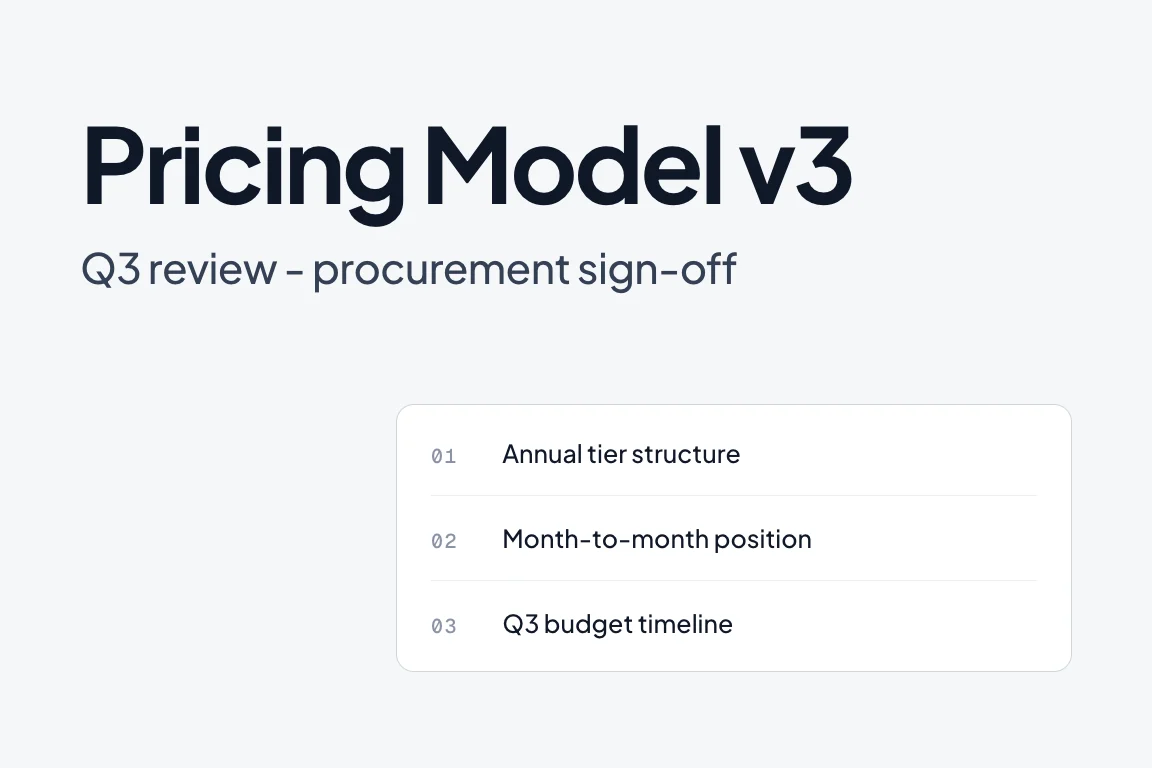
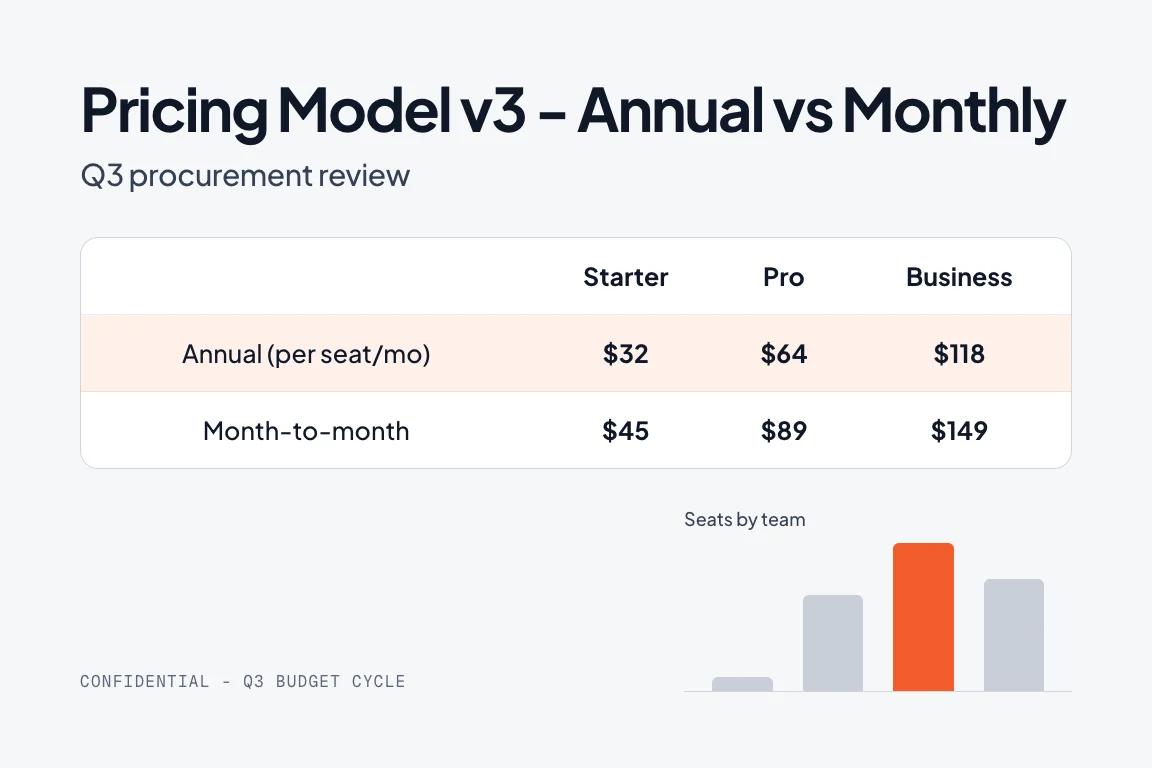
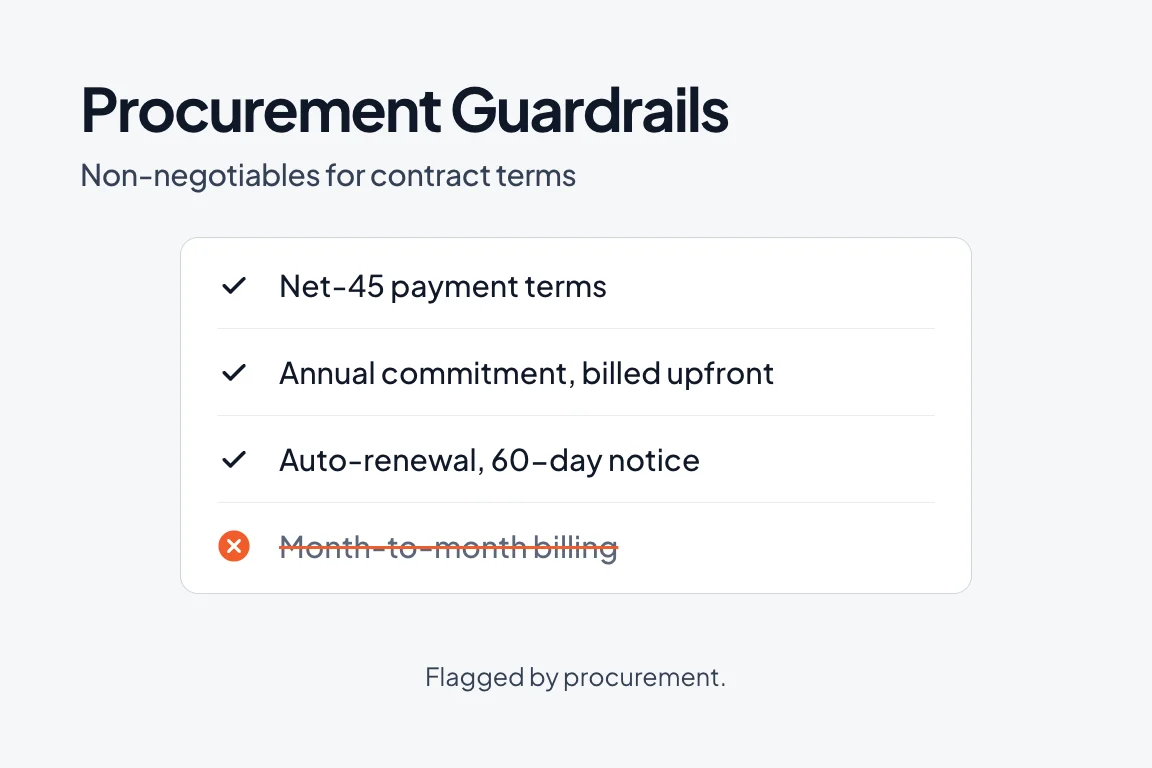
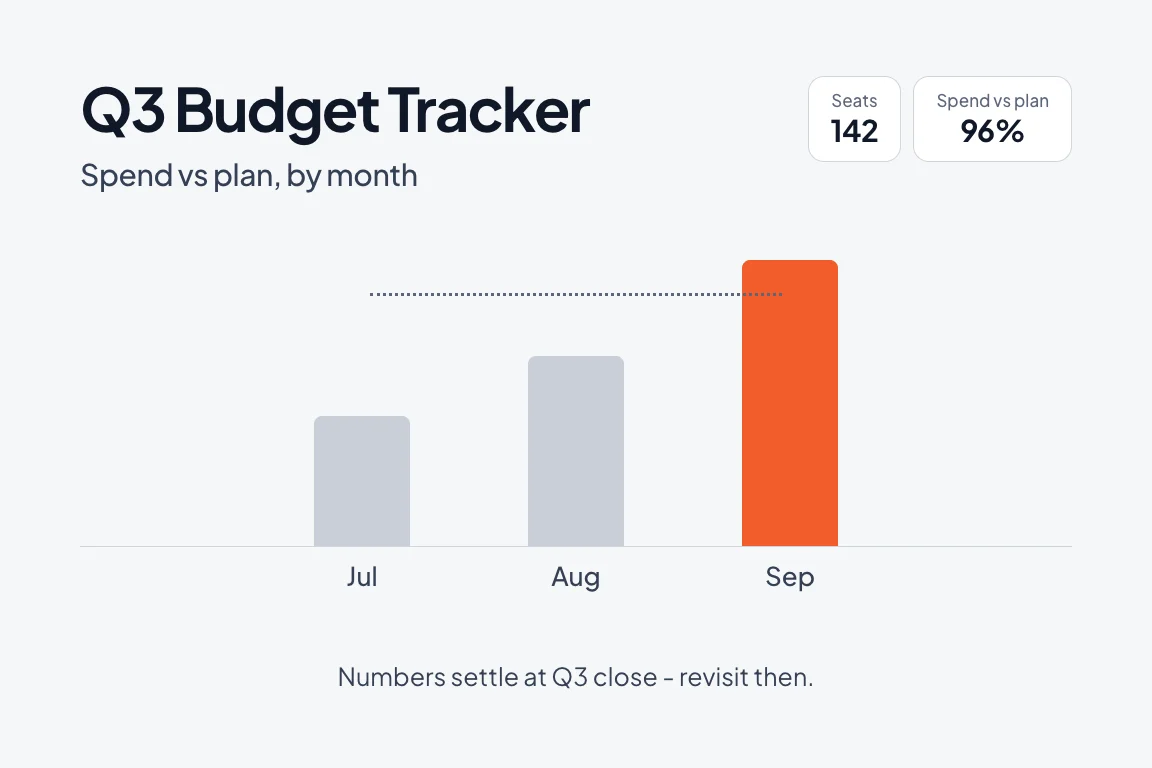
Partially. Maya accepted annual tiers1, but flagged month-to-month pricing as a blocker for procurement2. David asked to revisit after Q3 budgeting3.
If the recording doesn’t support the claim, Evidence Q&A doesn’t make the claim. Transcript answers cite quote, speaker, and timestamp immediately; after optional visual analysis, new answers can also cite on-screen text and frames.
Did the client agree to the new pricing model?
Partially. Maya accepted annual tiers1, but flagged month-to-month pricing as a blocker for procurement2. David asked to revisit after Q3 budgeting3.
A working example, not a screenshot. The question above is real. So are the timestamps, the speakers, and the quotes underneath. The same shape ships from every Citesvue recording.
Most LLMs produce answers first and justify them second. Evidence Q&A inverts that: the system retrieves grounded transcript segments and stable transcript artifacts first, then constrains the answer to what they support. When an active visual generation exists, scenes, OCR, and visual findings join that retrieval set.
If the evidence is thin, the copilot says so - and shows the thinnest spot, not a confident fabrication. This is the difference between a useful tool in a regulated meeting and a liability.
Query is parsed and expanded - synonyms, speaker references, time expressions.
The core transcript and artifact index is always searched; an active visual generation adds scenes, OCR, and visual findings.
Low-confidence evidence is flagged rather than silently dropped.
Answer is built only from retrieved content - never beyond it.
Every claim binds to one or more citations; the UI renders them inline.
Ask “what else did Maya flag as a blocker?” and the copilot tracks the referent without re-asking who Maya is or which session you meant. Conversation memory never replaces evidence grounding - every turn carries its own citations.
Switch to citation mode for answers built claim-by-claim on their evidence, then push a grounded answer - citations attached - straight to Notion, Slack, or your own webhook. Designed for QA sign-off, client deliverables, and any conversation where “prove it” is a real question.
“The recording doesn’t cover this.”
“Maya implied this around 31:20 but did not confirm.”
Confidence score surfaced on every answer.
Flags speaker disagreement instead of averaging it out.
Built for moments when the answer must hold up under scrutiny.
A PM needs to prove the client approved scope changes before shipping. Cited answers carry the moment they were spoken.
An AE pulls every objection the champion raised in the last three calls - across recordings, not from memory.
A staff engineer reconstructs the decision sequence from a three-hour war room recording.
A researcher asks one question across eight interviews and gets a per-interview citation trail back.
beyond the evidence.
on your recordings.
without at least one citation.
when evidence is weak - say so instead.
The same cited-answer discipline, applied to PDFs and documents.
What adds optional on-screen and frame citations to future answers.
What else comes out of the same evidence index.
How to ask well, read citations, and use a declined answer.
Or it could sit in a Drive folder nobody opens again. The difference is whether it has citations attached.